One in four new cars sold globally is now electric, Roland Berger finds

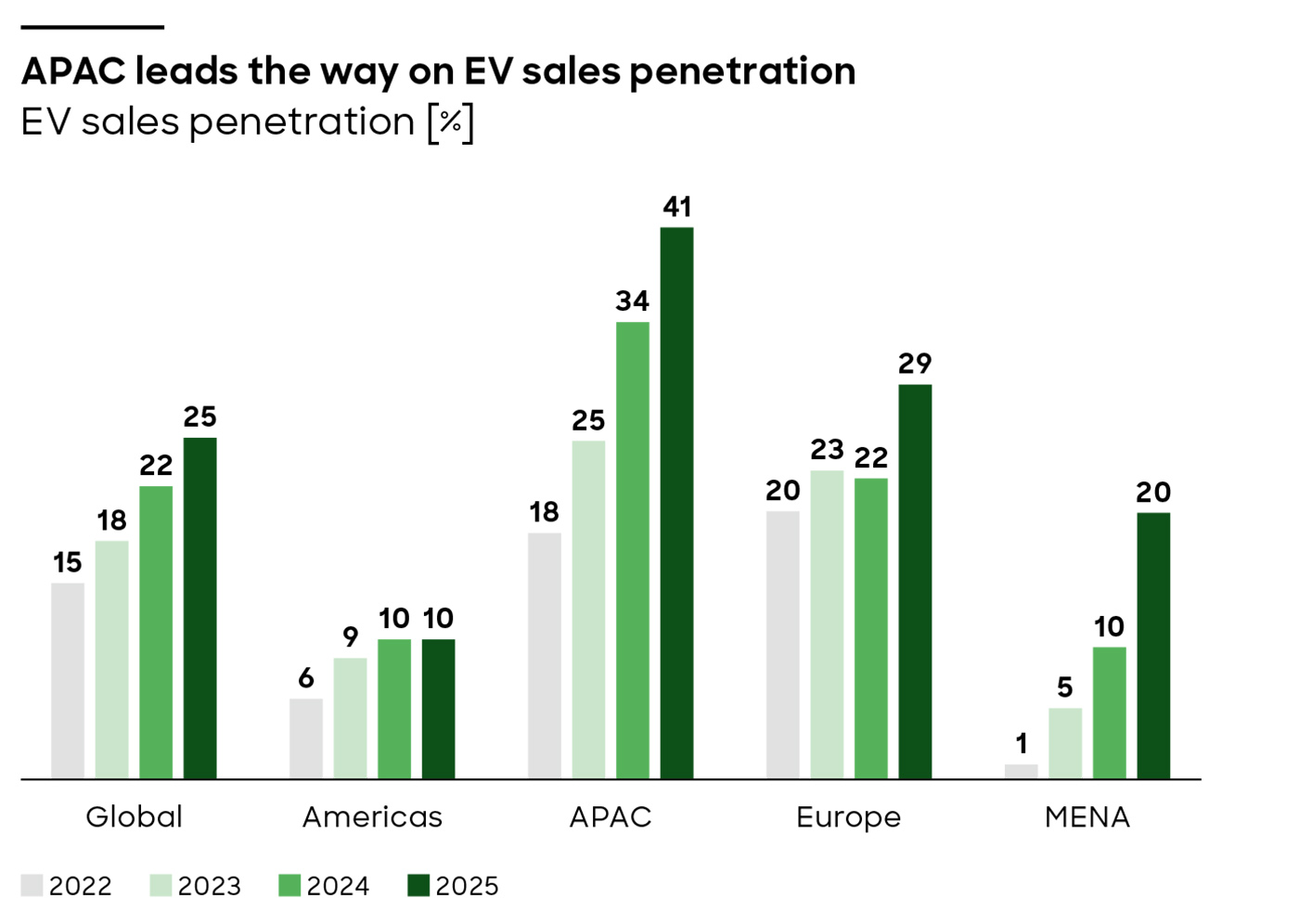
The global shift towards electric mobility continued to gather pace in 2025. According to research from Roland Berger, one in four newly sold cars last year was either fully electric or a plug-in hybrid, representing an increase of several percentage points from the previous year.
The pace of adoption, however, varies significantly across regions. In Asia-Pacific, 41% of all newly sold cars were electric, compared with just 10% across North and South America. Europe reached a 29% share, according to Roland Berger.
The differences become even more pronounced at country level. In China, half of all newly sold cars were either fully electric (31%) or plug-in hybrids (19%). This represents an almost twofold increase in just three years, with electric vehicles accounting for 26% of new car sales in 2022.
China’s influence is also extending beyond its domestic market. Chinese manufacturers are putting downward pressure on prices, accelerating electrification and reshaping competitive dynamics in markets including Europe. In its report, Roland Berger describes China as the force currently setting the pace of the global transition.
However, three European countries recorded a higher share of new electric vehicle sales than China. Norway leads the way, with electrical vehicles accounting for 89% of new car sales, including a remarkable 87% that were fully electric. The Netherlands ranks second at 60%, of which 18% were plug-in hybrids. Sweden takes third place, with 35% fully electric vehicles and 24% plug-in hybrids.
Electric vehicle fleet
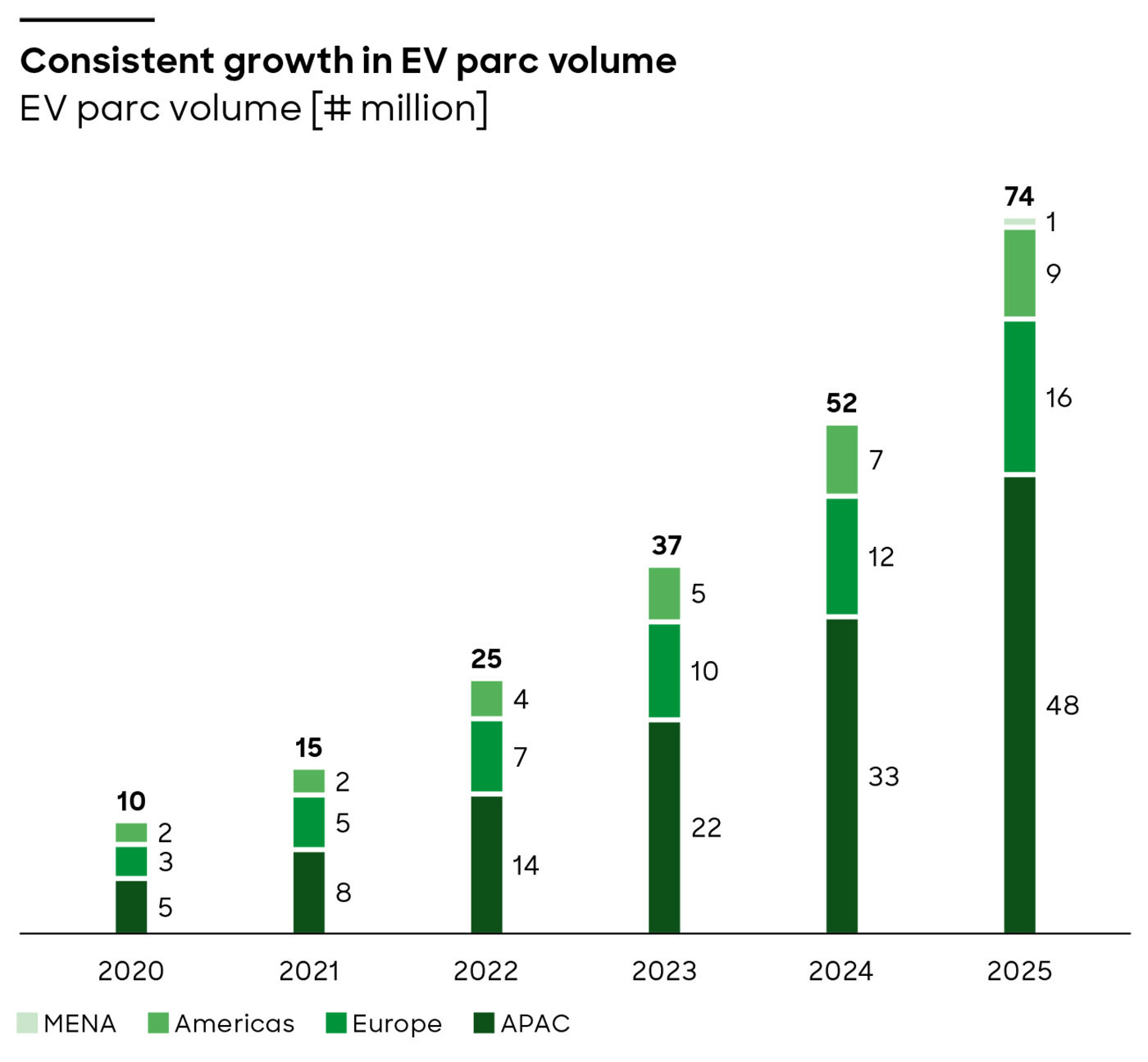
The increase in sales is now also translating into substantial growth in the global electric vehicle fleet. Across the 34 countries analysed, around 74 million electric cars were on the road at the end of 2025. This means that just over 5% of the global passenger car fleet is now electric.
Asia-Pacific accounted for by far the largest share of the global electrical vehicles fleet in 2025, with 48 million electric cars on the road. Europe followed with 16 million, ahead of North and South America with 9 million and the Middle East and Africa with 1 million.
At country level, Norway again stands out. By 2025, more than one-third of the country’s car fleet was electric. Sweden reached 15%, while Belgium and the Netherlands both passed the 10% mark. In China, electric vehicles accounted for 13% of the national car fleet.
Charging infrastructure
According to the researchers, the next phase of electric mobility will depend not only on the vehicles themselves, but also on the availability and quality of charging infrastructure.
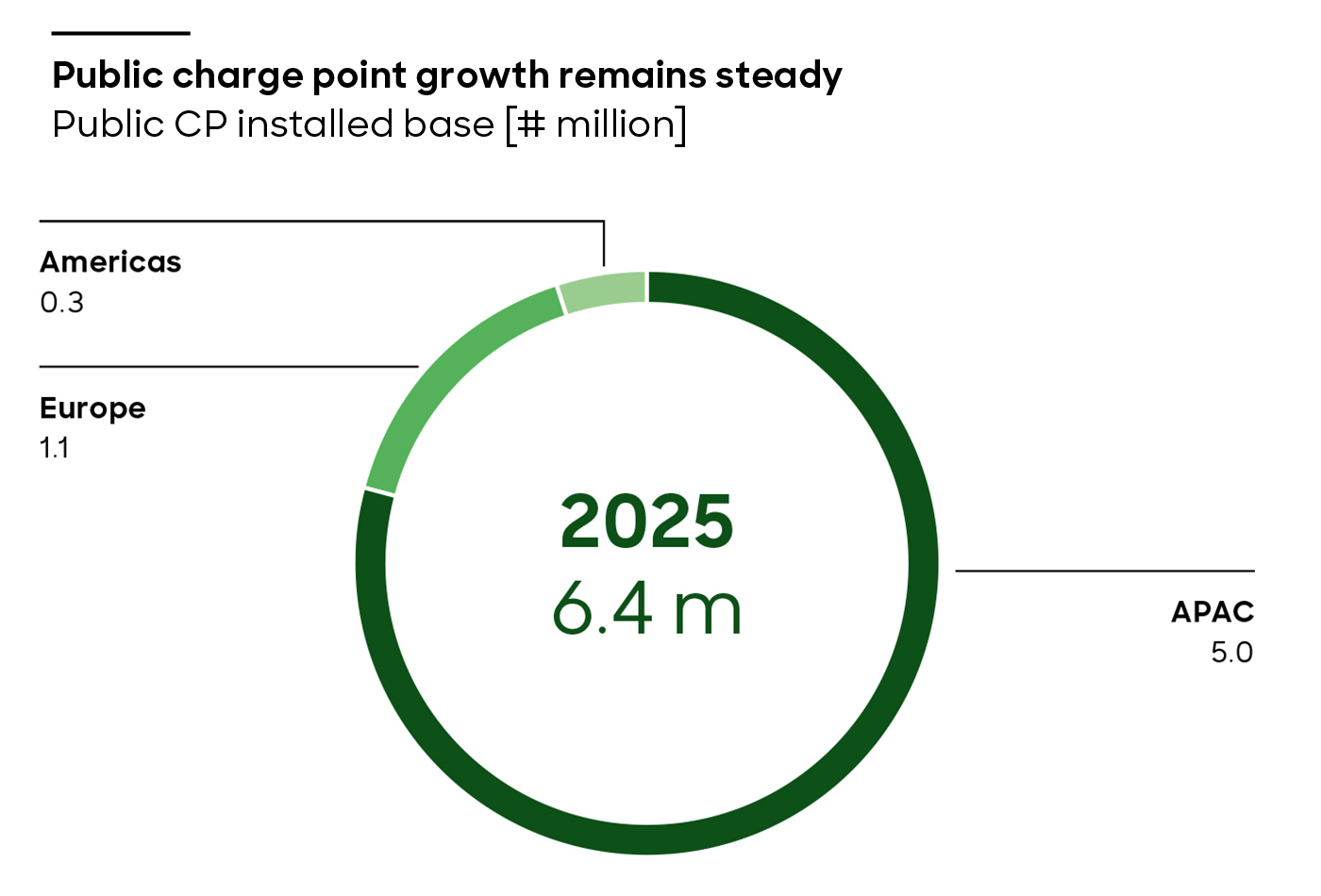
Around 1.1 million public charging points were added globally in 2025, down from approximately 1.3 million in both 2023 and 2024. By the end of last year, the markets analysed had around 6.4 million public charging points in total.
Roland Berger says the slowdown in the expansion of charging infrastructure is a logical consequence of earlier investment patterns. In many countries, the rollout of charging networks had outpaced demand in recent years. As the number of electric vehicles continues to grow, existing infrastructure is now being used more intensively.
At the same time, the number of fast-charging points is increasing significantly worldwide. These chargers have substantially greater capacity and can therefore serve more vehicles over a given period. As a result, fewer individual charging points may ultimately be needed to meet the same level of demand.
“Europe’s key challenge is to ensure that the rapid growth in the number of electric vehicles is matched by the right charging infrastructure to meet the needs of tomorrow,” said Adam Healy, a partner at Roland Berger.