AllChiefs launches playbook for designing high-performing organisations


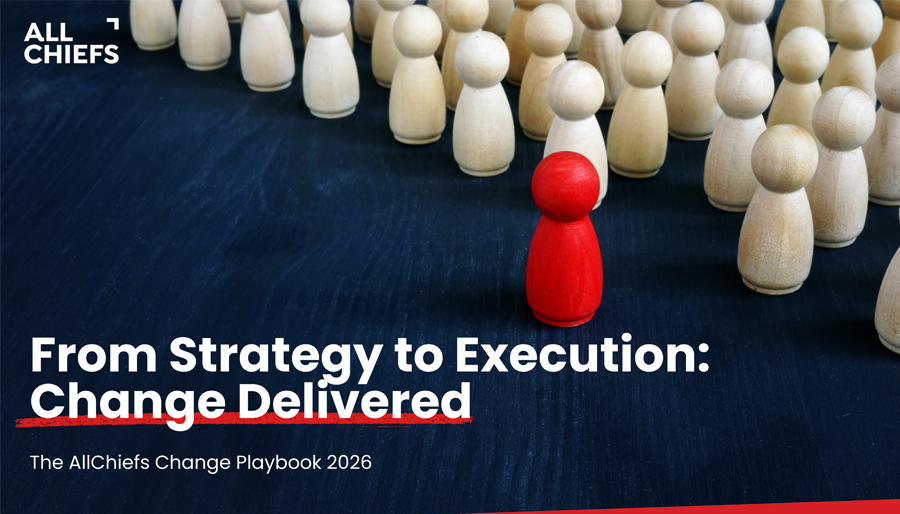
AllChiefs has launched a new playbook designed to help organisations understand why poor performance is rarely a people problem, how to diagnose what is really holding it back, and how to design suitable interventions.
The playbook’s authors are senior experts at AllChiefs, and their experience with numerous organisations has shown them that poor organisational performance typically stems from inadequate organisational design and suboptimal solutions that do not push people or the organisation forward.
“For decades, organisations improved performance by adding more. More people. More processes. More governance. More control. But organisations eventually hit their limits, and even start working against themselves. Put simply: poor performance is usually organized,” says Jeroen Aalbers, co-owner at AllChiefs.
The playbook therefore argues that underperformance needs to be addressed at its core: organisational design. “Performance is not something to be managed. It is something to be designed. Organisations don’t execute strategy. They execute the organisation they have designed”, Jeroen continues.
This represents a fundamentally different lens from more traditional approaches to addressing underperformance, such as launching new initiatives or attempting to fix individual performance. “The usual response is to launch another initiative, replace a leader or push people harder. Rarely does it work, and rarely is it focused on the real problem. That’s because poor performance is rarely a people problem. When results disappoint, the constraint is not effort, it is the organisation itself.”
Finding the right Performance Equation
Building on insights from industry leaders, experts, and years of hands-on transformation work across sectors, AllChiefs has developed a proprietary framework for improving performance – with organisation design at its outset.
The approach is built around four key elements: strategic direction, an effective operating engine, organisational catalysts, and leadership.
Direction provides a clear strategic intent that is understood, shared and reinforced throughout the organisation. The Operating Engine determines how effectively that strategy is translated into execution.
Catalysts are the organisational capabilities that can accelerate execution. According to AllChiefs, three capabilities are particularly important across high-performing organisations: autonomy, collaboration, and resilience.
At the same time, organisations face what the playbook describes as Organisational Drag: factors that can work against transformation, change, and high performance. These include friction, complexity, resistance, and capability gaps, all of which can derail performance or slow progress.
Leadership is essential throughout the process. “Leadership simultaneously designs the Catalysts and systematically removes Organisational Drag, ensuring the Operating Engine is optimised.”, highlights Anneline van Dijk, managing consultant at the firm.
The model is intended to give leaders a clearer understanding of what drives organisational performance, how execution can be organised for greater effectiveness, and which leadership choices are required to improve outcomes.
These choices can help leaders move from symptoms to root causes, and from identifying root causes to implementing interventions that address the underlying constraints. “This new playbook is designed for leaders who are seeking to become chief of their own transformation and build high performance,” says Jeroen.
“This framework creates understanding; leaders create performance. Leaders make the choices that determine how an organisation performs. They set direction. They design the organisation. They remove constraints. They reinforce behaviours. And, above all, they take responsibility. Because performance is the outcome of thousands of organisational choices, reinforced every single day.”, concludes Anneline.