Sports M&A hits a record high as investors move beyond the clubs

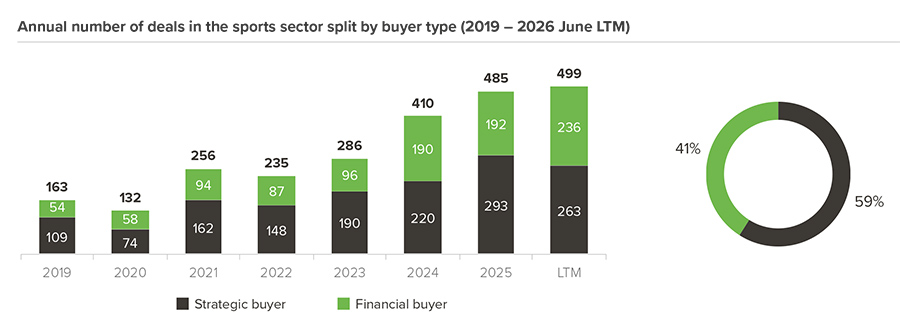
Sports dealmaking has come into a league of its own, with a record 499 transactions completed across the industry in the 12 months to June 2026, up from 485 in 2025 and 410 in 2024, according to a new report by global M&A and financial advisory firm Oaklins.
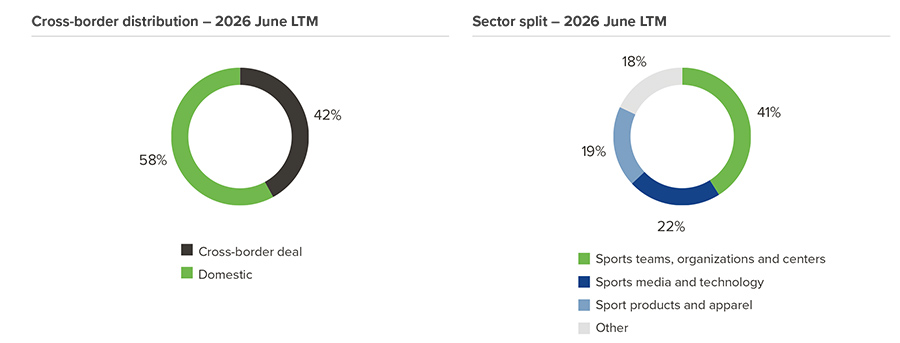
Strategic acquirers continued to account for the majority of mergers & acquisitions (M&A) activity, while financial investors represented more than 40% of transactions. Cross-border deals made up 42% of the total, illustrating the international nature of sports investing.
The resilience of the sector is supported by several long-term structural drivers, including increasing health and wellness awareness, growing sports participation and fan engagement, and the premiumization of sports products and experiences.
The Oaklins report found that investors are expanding their focus beyond individual clubs, brands, and service providers toward the platforms and rights holders that organize and monetize sport itself.
FIFA proposed bringing its commercial rights and tournament operations together in a new FIFA-controlled entity, which was expected to raise up to $4.2 billion from minority investors based on an initial equity valuation of $20 billion. Following significant opposition from across the football ecosystem, FIFA withdrew the proposal.
The trend is visible elsewhere. LaLiga partnered with CVC to accelerate the commercialization of the league and its clubs, while CVC also acquired a 13% stake in a dedicated commercial subsidiary created by France’s LFP. In basketball, the NBA and FIBA are exploring a new European competition built around permanent franchises and institutional ownership.
A broader ecosystem
Signficant capital has also been going to more niche and sports-adjacent categories. KSL Capital Partners’ multibillion-euro acquisition of ClubCorp and DIF Management’s acquisition of Enjoy Wellness span fitness, infrastructure, and participation-led businesses, while investments in Eagle Football Group, Swansea City, Royal Multisport, and the Cleveland Browns underline the enduring appeal of premium rights holders.
Investors also targeted niche sports like pickleball, lacrosse, sailing, and cricket.
Sports media and technology represented more than one fifth of all transactions, making it the second largest segment. Investor focus is evolving beyond standalone sports technology companies toward solutions embedded in the day-to-day operations of sports organizations, with recent deals involving Teamworks, Sportway Media Group, Pixellot, LiveBarn, and PlayerData.
AI is expected to accelerate this development. Unlike industries in which AI can potentially replace large parts of the underlying product or service, sports remains built around scarce assets such as media rights, live events, iconic brands, and loyal fan communities. AI is therefore more likely to enhance the economics of those assets by helping sports organizations operate more efficiently and deepen fan engagement.
“Sports remains one of the most compelling sectors for long-term investors,” said Derk Verheul, a director in the Dutch business of Oaklins.
World Cup revenue is only half the story
The 2026 football World Cup drew more than 6.8 million spectators across 104 matches and was distributed through broadcast agreements in more than 220 territories.
Adidas provides a good illustration. In the second quarter of 2026, revenue increased 14% to a record €6.7 billion, with football growth explicitly linked to World Cup collections. Yet operating profit increased by only 5%, partly because Adidas invested an additional €212 million in World Cup campaigns and activations.
For companies, marketing intensity, margin, inventory risk, and post-event retention determine how much of the uplift converts into sustainable earnings. Licensed apparel can see sharp event-year sales but also faces markdown risk, and digital platforms depend on retention and paid conversion. Businesses that own first-party data, differentiated intellectual property, or distribution are better placed to turn temporary attention into lasting value.
Brands command a premium
Public market valuations reinforce this trend. Listed sports apparel and equipment companies trade at 10.8 times earnings before interest, taxes, depreciation, and amortization over the past 12 months, a meaningful premium to sports retailers at 5.2 times.
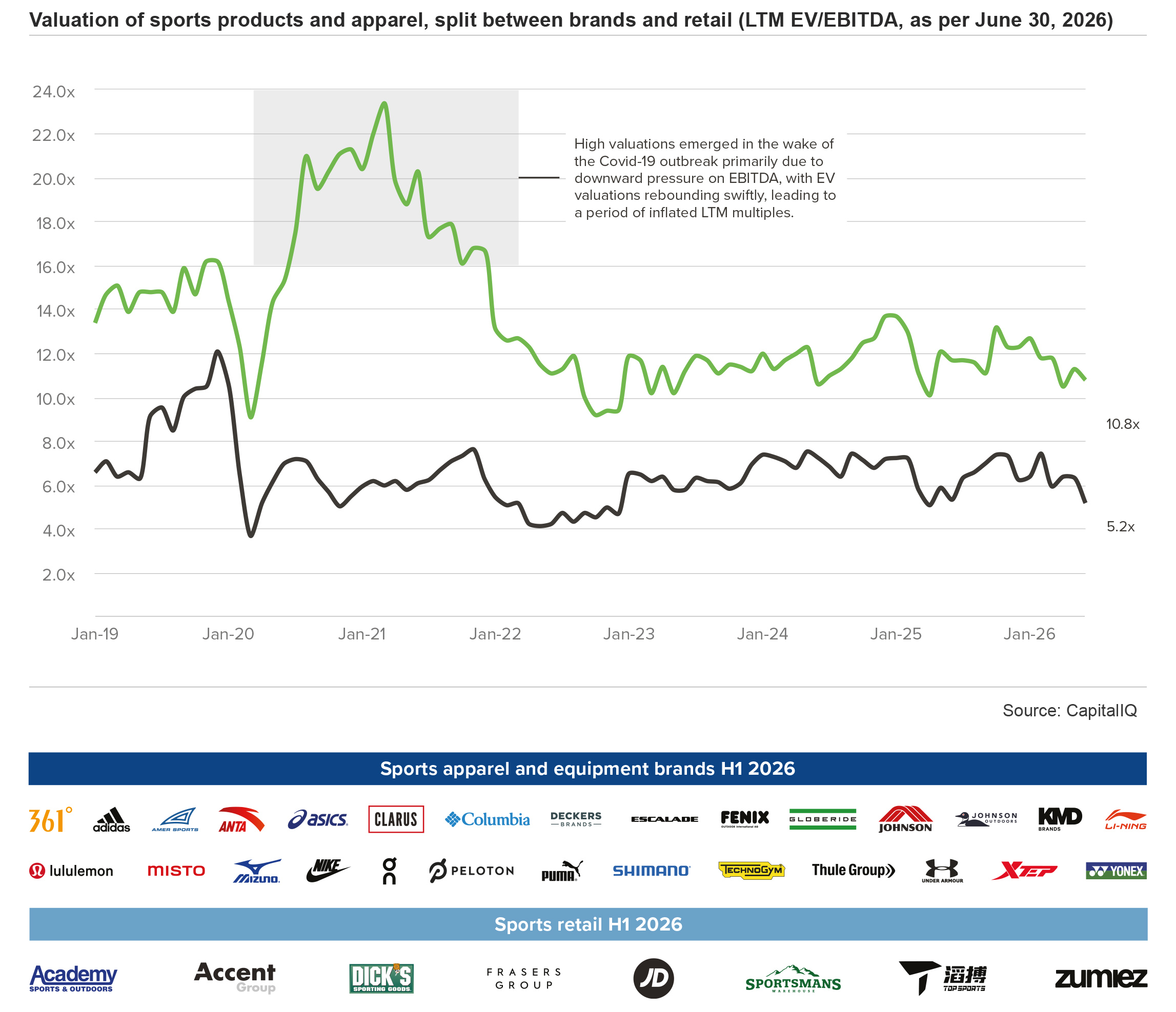
Oaklins says this reflects investors’ preference for businesses with differentiated products, intellectual property, and strong consumer loyalty. Looking ahead, Oaklins expects the sector to remain active, with high-quality assets continuing to attract significant investor interest.
Verheul: “As AI reshapes many industries, the fundamental drivers of sports, participation, engagement and premium experiences, continue to underpin attractive investment opportunities.”