Inverto: Procurement leaders gain influence, but skills and results struggle to keep pace

Procurement leaders are gaining strategic importance within organizations, yet many still struggle to translate their growing influence into measurable business value, according to a new international study by Inverto based on a survey of chief procurement officers (CPOs).
Driven in part by rising costs and mounting geopolitical pressures, the strategic importance of procurement has never been greater. Yet a significant gap remains between ambition and execution.
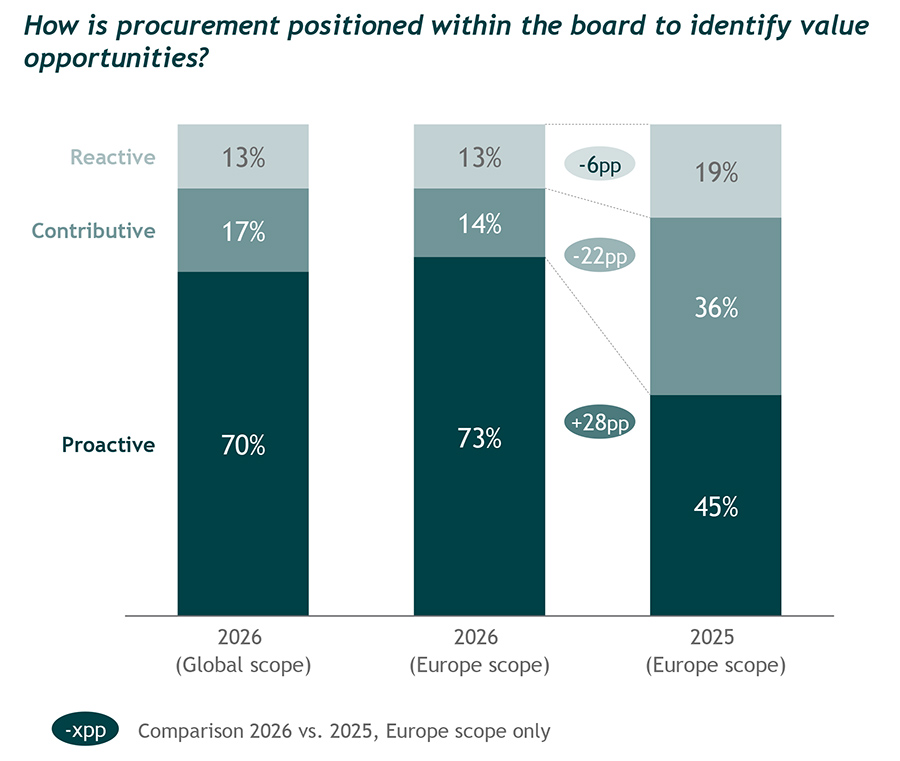
The survey of nearly 600 respondents, around 95% of whom are chief procurement officers (CPOs), found that 91% believe procurement has become more important over the past five years, while 70% describe their teams as proactive at board level. However, progress remains uneven across industries.
Influence and skills holding teams back
Having won a place in the boardroom, procurement leaders now face a different set of obstacles. Respondents named lack of influence (50%), insufficient skills (48%), and friction between departments (47%) as the biggest barriers to creating value. Budget limits, which ranked first a year ago at 54%, fell to fourth place at 39%.
The study points to progress in Europe, where 73% of respondents describe procurement as proactive at the board level, up 28 percentage points from 2025. Even so, the findings suggest that a seat at the table is no longer enough. Teams must strengthen their skills and work more closely with other departments to show results.
Resilience now rivals cost savings
Protecting the company from supply problems is now seen as just as important as saving money. Supply resilience (45%) narrowly edged out cost efficiency (44%) as the business result most influenced by procurement.
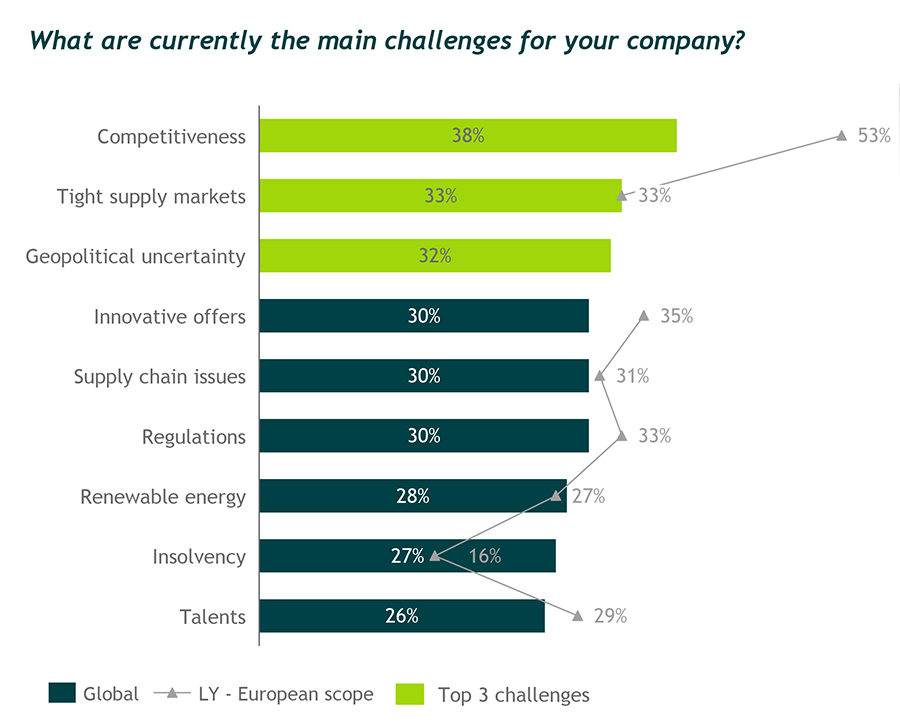
There are many risks to contend with, most of which are weighed equally by CPOs. Competitiveness (38%), tight supply markets (33%), and geopolitical uncertainty (32%) lead the list, but all nine challenges in the survey fall within a narrow range of 26% to 38%. Companies often have to handle several threats at once.
The most common protective step is mapping suppliers (34%), a measure that can shine on a light on where risks are, but does not necessarily reduce them. The study found that stronger companies, which it refers to as Global Leaders, go further by combining contract protections, a wider supplier base, and closer work with finance departments.
Success measured by growth and margins
The way procurement is judged is also changing. Revenue and margin growth (42%) now top the list of financial measures, followed by recurring savings (41%). Avoiding costs, once the leading measure at 48%, has dropped to third place at 40%.
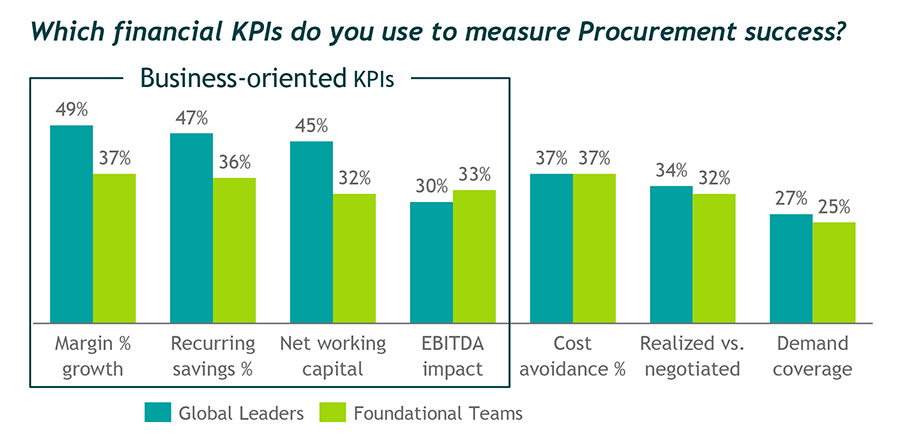
Two-thirds of companies now use a performance method shared with their finance departments, a jump of 25 percentage points from last year. That share reaches 74% among the companies the report considers global leaders. The vast majority (93%) of companies have reshaped how their procurement teams are organized within the past five years.
AI use remains basic
AI and automation are the most cited tool for tackling business challenges (41%). More than half of respondents (57%) say generative AI is already in use, though only 28% say it is built into daily operations. Technologies like generative AI were on the rise the most among a list of other innovations, with leading companies adopting AI the most.
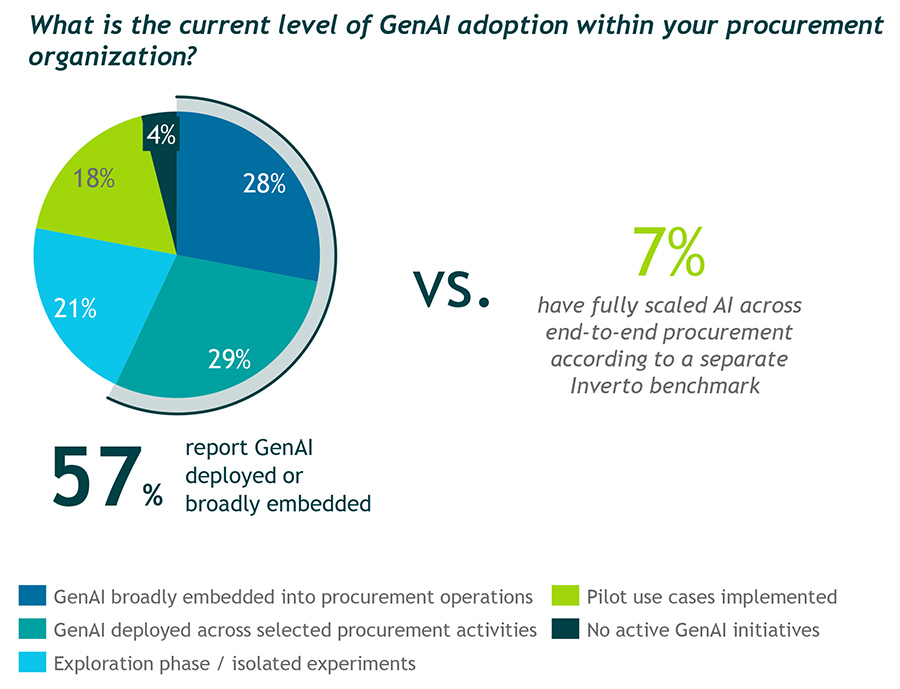
Most of that use is simple. About 75% of the examples respondents described involve general tasks such as drafting text and summarizing documents. Only about a quarter were specific to procurement, such as supplier and risk analysis (9%), contracts and negotiation (6%), and spending analysis (5%).
Though CPOs increasingly look to innovative technologies, the human touch is still very important in procurement. Among companies where generative AI is firmly built in, 41% report fully equipped buyers, compared with 21% of those still running pilot projects. Yet when asked what will reshape their profession over the next three to five years, only 8% of respondents mentioned skills, teamwork, or oversight. Data and analytics (35%) and AI and automation (29%) led the answers.
The authors conclude that while technology may redefine procurement, it is ultimately the skills and capabilities of its people that will determine the value it creates.