BearingPoint analysis: AI delivers value, but only 13% of organizations scale as planned

AI adoption is producing real business results, but most large companies are struggling to spread those results across the whole organization, according to a new study from management and technology consultancy BearingPoint.
Around three quarters of organizations with implemented AI have reported a measurable top-line or bottom-line impact. But very few have yet to see the full potential value: About half of organizations reported an impact of less than 4% of their costs and less than 2% of revenues, with only 13% having scaled their AI initiatives as set out in their original plans.
The study surveyed 1,050 senior executives in 13 countries across Europe, the United States, and China in August 2026. Every organization in the survey had annual revenue of at least $1 billion.
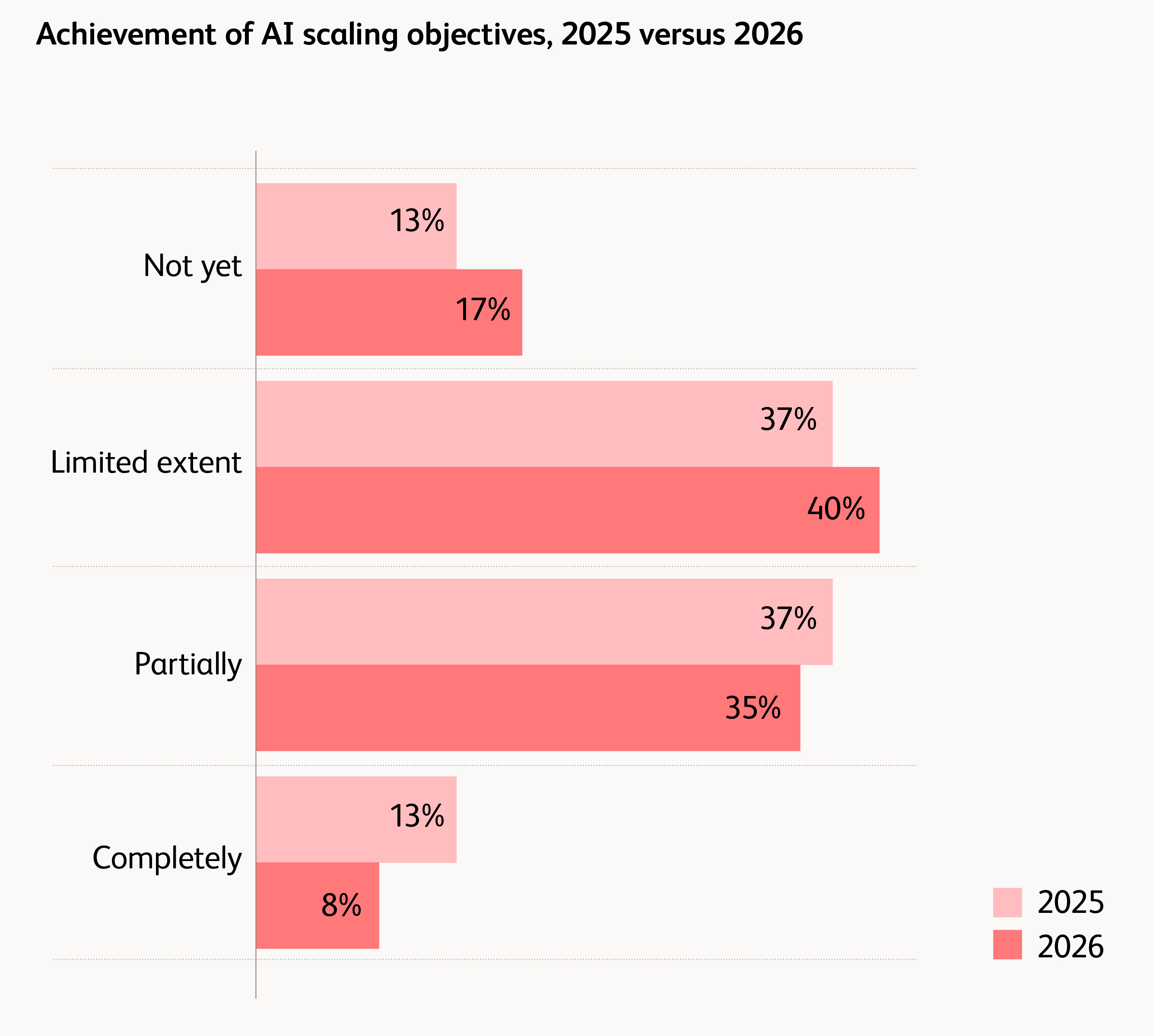
Nearly three-quarters of organizations that have put AI to work report a measurable boost to sales or a cut in costs, and about four in 10 report both. Even so, only 13% have scaled their AI projects fully in line with the original business case, up from 8% in 2025. Almost three-quarters have either narrowed their plans or achieved less than they expected.
Spending rises, but proof of value lags
The findings arrive as spending climbs. The study points to a Gartner forecast that worldwide AI spending will grow 47% in 2026 to about $2.6 trillion, and reach nearly $3.5 trillion by 2027. Yet discipline in measuring returns remains uneven.
Among organizations asked about financial links, only 17% tie more than three-quarters of their AI projects to financial targets, while 89% would keep investing even if the expected return were limited. Together, these results highlight the need to distinguish strategic commitment from financial measurement discipline.
How far along are organizations?
BearingPoint sorted organizations into four groups. Explorers, at 15%, are still assessing where AI could help. Experimenters, at 20%, have pilots under way but nothing in daily operations. Implementers, the largest group at 54%, have already seen new value created from the AI they deployed.
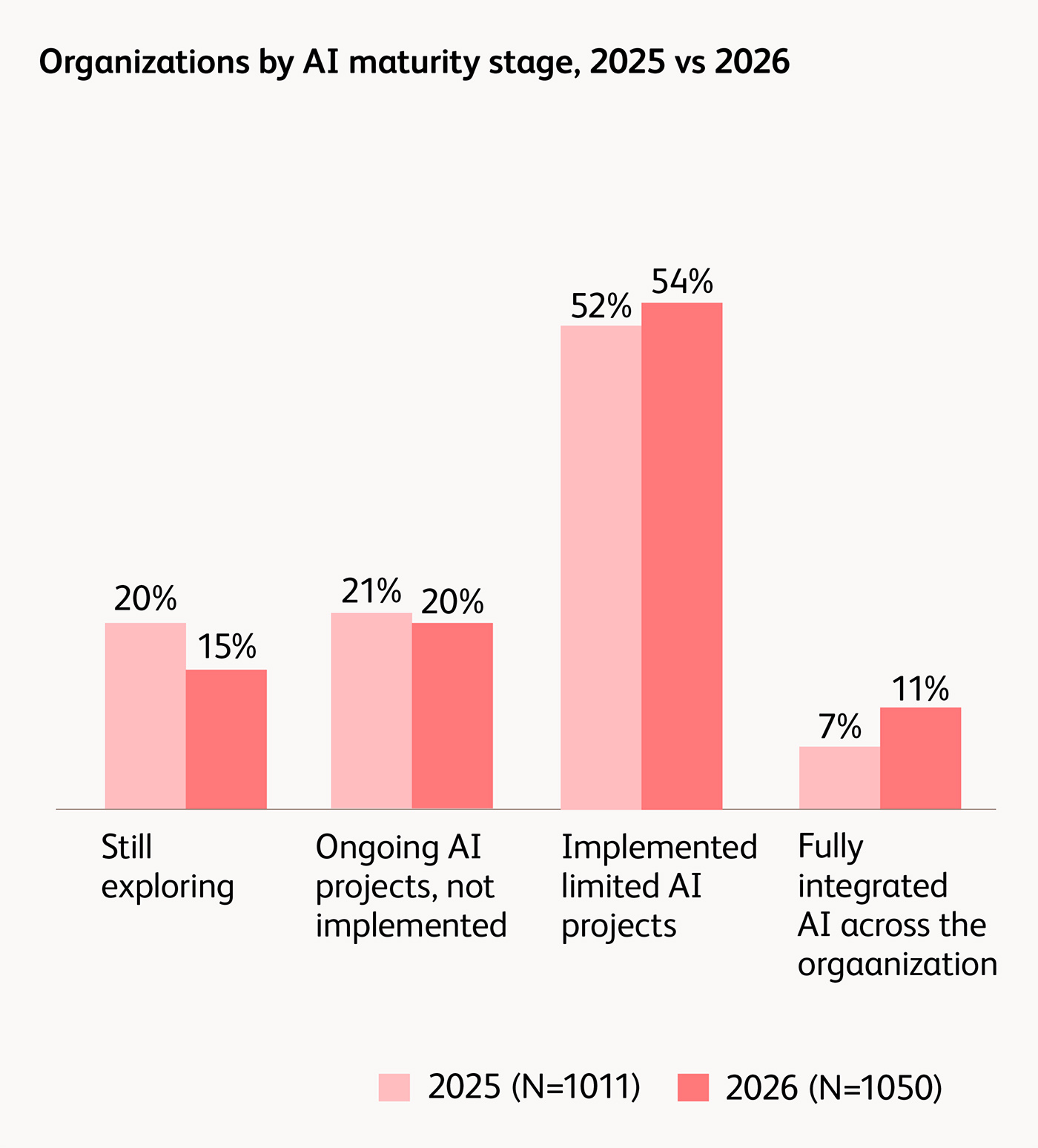
Meanwhile, the report’s leaders, at 11%, have woven AI deeply into most of their business operations, up from 7% a year earlier. Financial services was the most advanced industry, with 15% of organizations fully integrated, followed by consumer goods and retail at 14%.
Bigger gains expected by 2030
AI appears to pay off the most in cost savings. Among the 685 organizations that have implemented AI, 24% report cost reductions of at least 10%, and 35% expect that level by 2030. Only 4% report revenue gains of that size now, though 22% expect to reach it by 2030. However, one-third of organizations with AI in use report no measurable cost savings, or savings below 2%.
The findings point to a shift from isolated productivity improvements toward broader changes in operating models. Rather than just automating individual activities, organizations now increasingly expect AI to help redesign end-to-end processes, reduce complexity, and improve resource allocation across the organization.
Scaling is an organizational challenge
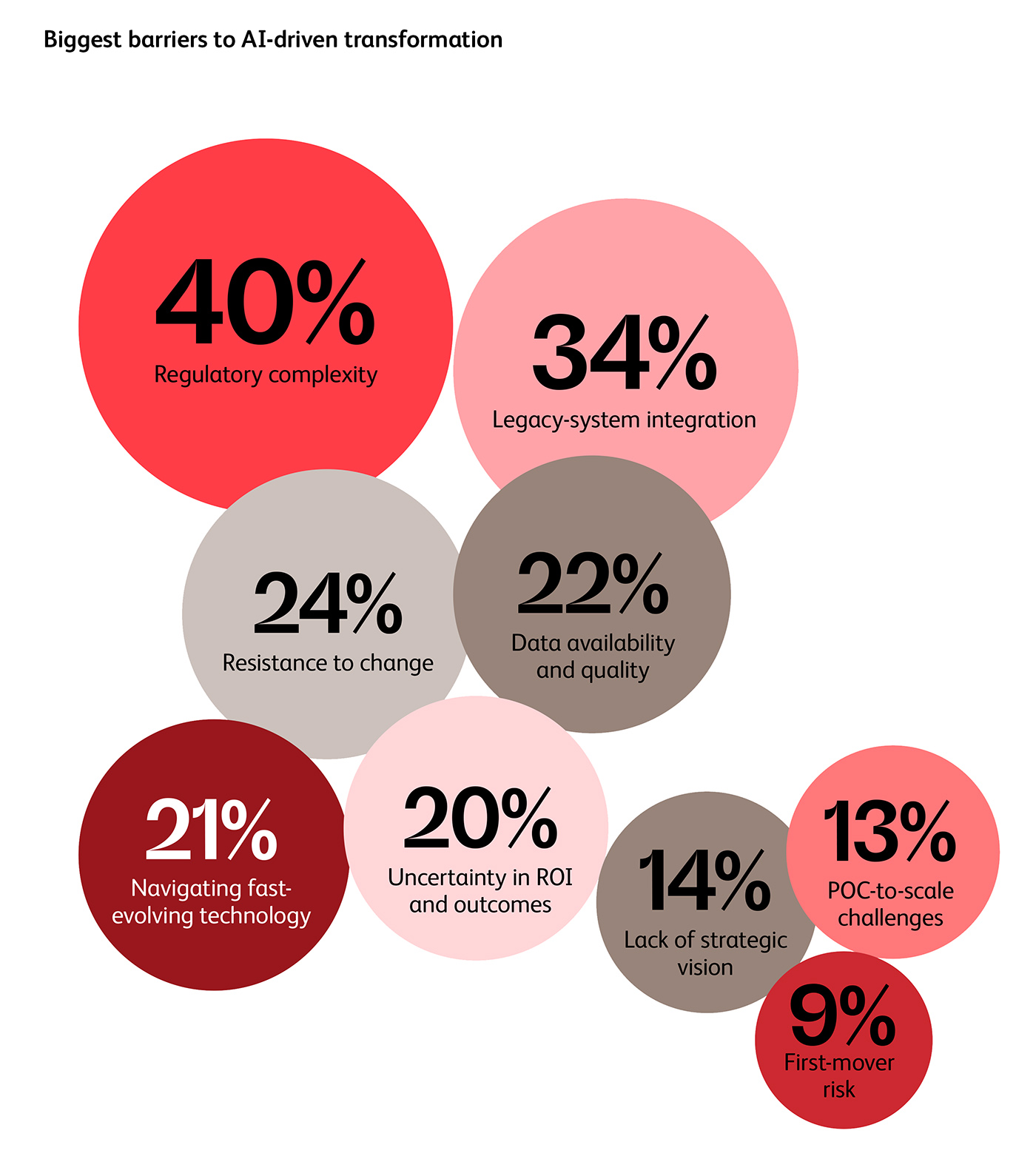
According to the study, the most significant obstacles are not related with the technology itself. For example, complex regulation is the leading barrier, cited by 40% of respondents, followed by difficulty connecting AI to older systems, at 34%. More than half of executives, or 54%, say high-quality, trusted data is critical to scaling.
The gap between the most and least advanced groups is wide. Some 47% of Leaders scale fully as planned, compared with 6% of Implementers. Also, 70% of Leaders tie more than half of their AI projects to financial targets, compared with 34% of Implementers.
Spare capacity and skills gaps
AI is also changing how much work people need to do. About 62% of organizations estimate that AI has already created spare workforce capacity of at least 10%, and 94% expect that by 2030. The share reporting more than 20% spare capacity doubled from 7% to 14% in a year. The study warns that productivity gains do not improve profits if jobs and staffing stay the same.
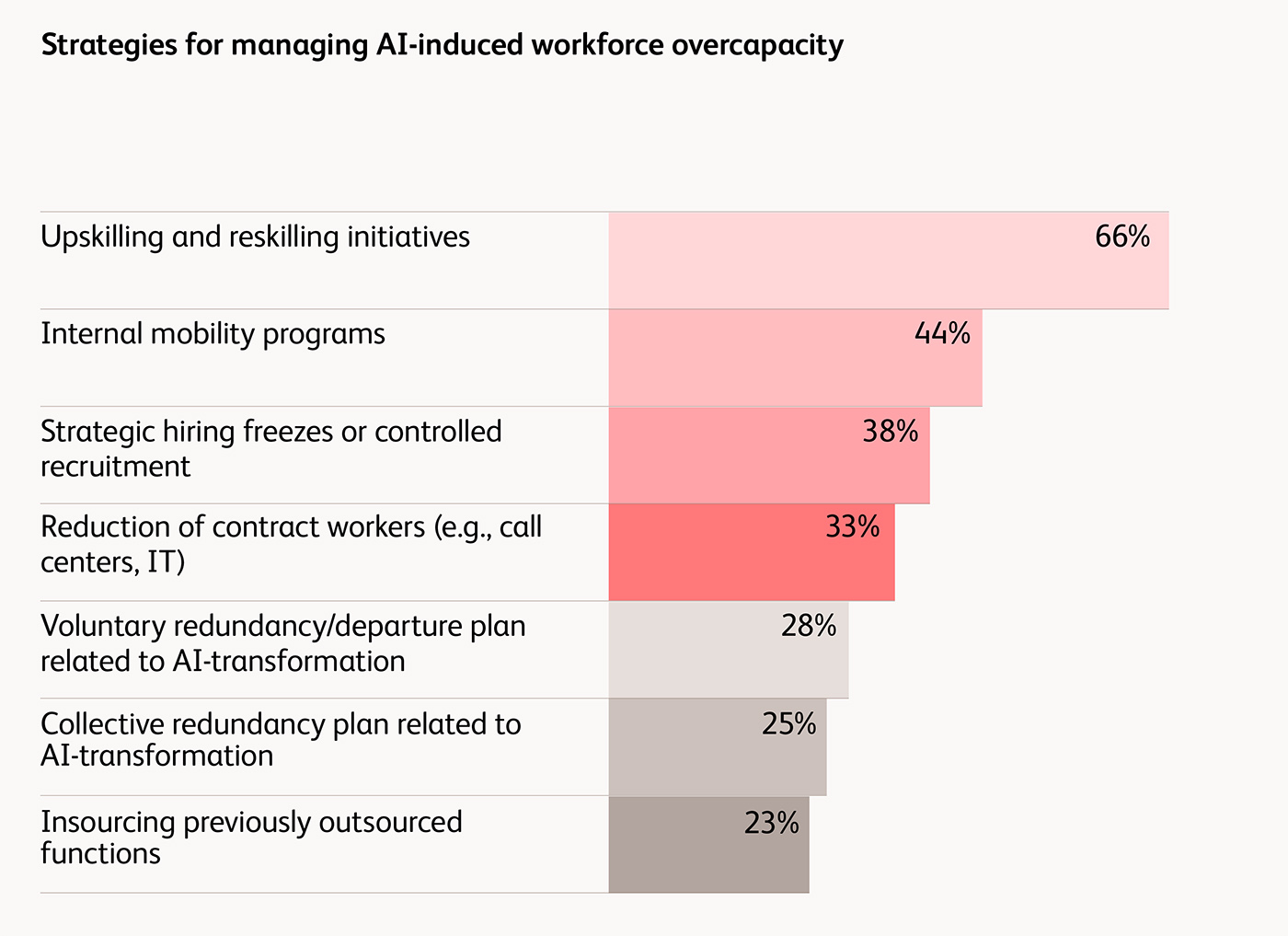
Few companies plan for this up front. Only 25% consider the effect on staff when deciding whether to fund an AI project, and just 48% build workforce planning into their AI roadmaps. Most favor training, with 66% using retraining programs, while 51% plan to move staff from shrinking roles to growing ones and 41% foresee job cuts because skills have become outdated.
Autonomous AI and the environment
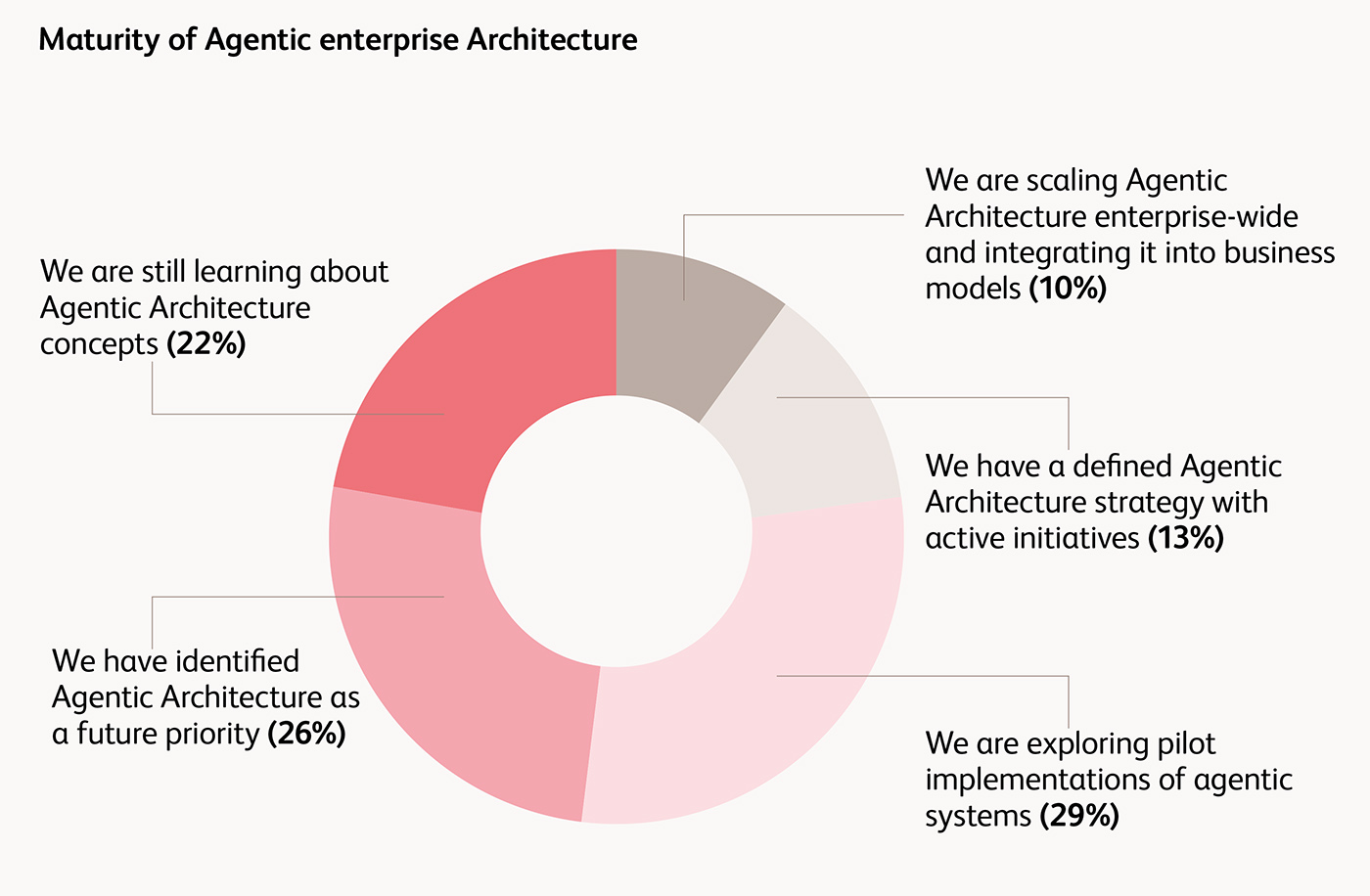
When it comes to autonomous AI agents, companies are ambitious, but readiness is lagging behind. More than three-quarters of organizations are still learning about the needed design, naming it a priority, or exploring pilots. Only 13% have a defined strategy with active projects, and 10% are scaling across the enterprise.
The study says organizations should give such agents limited access and clearly defined tasks, with humans approving important decisions.
BearingPoint concludes that companies should manage AI as a portfolio of enterprise value rather than a set of separate projects. It urges executives to link AI results to revenue, costs, profit margins, and sustainability. Before putting an AI initiative into motion, businesses should test whether a project can scale before approving it, align AI plans with workforce planning, and build governance for work shared between people and AI agents.
“AI has crossed an important threshold. Organizations have shown that AI can create real business value, but proving value and scaling value are two very different things,” said Frédéric Gigant, Global Leader Customer & Growth at BearingPoint.
“We found that the organizations pulling ahead are not simply investing more. They are connecting AI to financial accountability, trusted data, governance, architecture, and workforce decisions from the start. Management discipline is what turns isolated success into organizational impact.”