KennedyFitch: HR teams anticipate major AI transformation, but few see real impact today
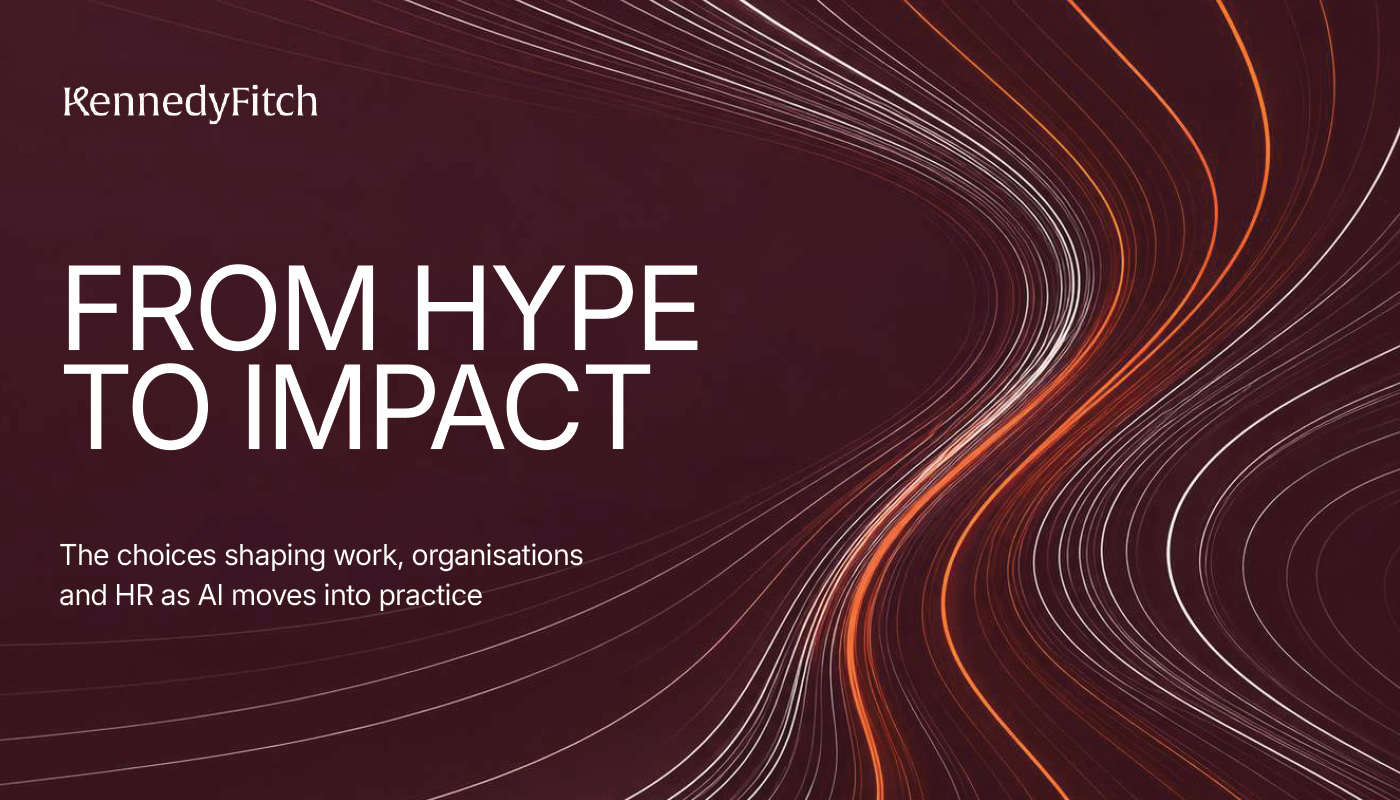
Organizations expect AI to reshape human resources, but only a small share have redesigned the way HR operates, according to a new report from research and advisory firm KennedyFitch.
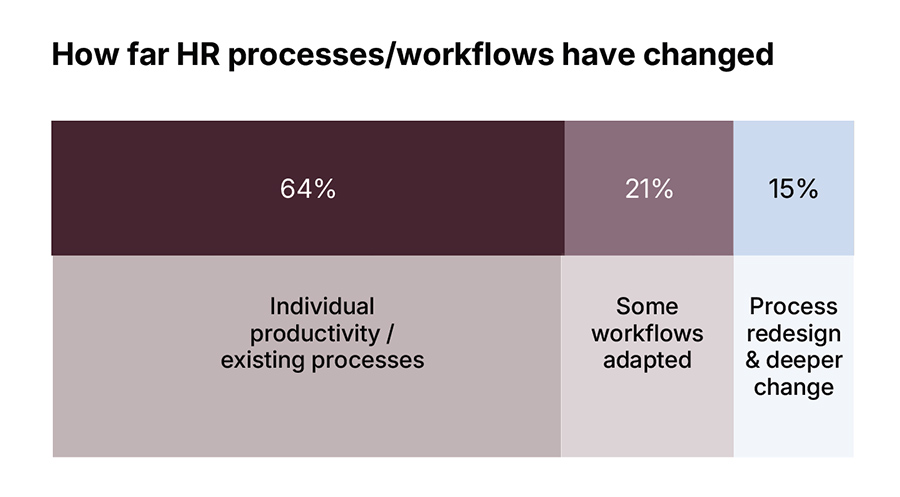
The report, which surveyed over 200 HR professionals and more than 30 AI specialists in organizations around the world, found that 64% of respondents expect AI to have a high or transformational impact on HR within the next three years. Only 15% say they have made deeper changes to processes, decisions, workflows, or roles. KennedyFitch describes the result as ambition running ahead of redesign.
AI is already part of everyday work in HR departments, the report finds, but most organizations are still at an early stage of adoption. About 68% place themselves at the awareness or exploration stage, the two earliest steps on the maturity scale used in the research. Only 2% say they have reached the scaling stage.
HR professionals rely on AI tools for everyday tasks such as writing, search, summarizing, and analysis. Generative AI tools are currently mostly used in tasks related to learning and development. Tasks related to recruitment and selection lead reported maturity, and workforce planning and HR analytics tasks lead plans for the future.
Since generative AI emerged, marked by the release of ChatGPT in late 2022, these tools, including other large language models like Google’s Gemini or Anthropic’s Claude, have seen remarkable growth in users. Though many workers have already been informally using AI at the individual level, organizations are now shifting towards more structured adoption, in some cases developing custom systems.
A question of where the value goes
The report argues that the larger issue is not how well organizations use AI, but what they do with the time and capacity it frees up. That capacity could lower costs, support growth, improve the quality of work, or be reinvested in people and skills. These choices should not be left to individual AI projects and belong on the executive agenda, the report stresses.
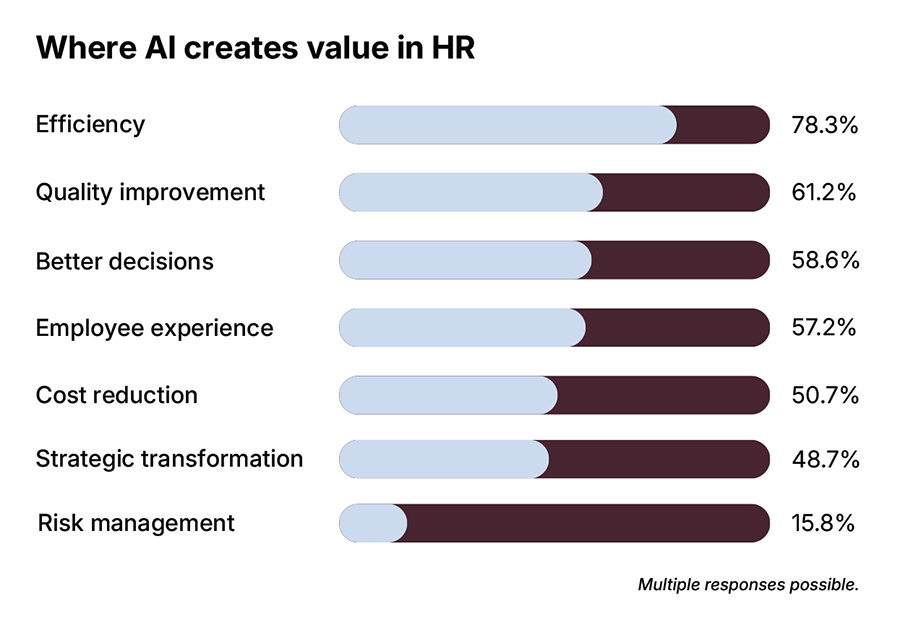
The most common benefit seen with AI was greater efficiency, reported by just over 78% of respondents. Quality improvement, better decisions, and employee experience were each cited by more than half of respondents as creating value. Despite these perceived benefits, only 46% of respondents say they use formal measures to track the impact of AI in their organizations.
“Making AI boring may not sound attractive, but it tells something is working. It means AI has become part of the regular DNA of how people work,” said Emily Yang, head of AI Innovation and Enablement at Standard Chartered, interviewed as part of the report.
Training gap and other barriers
The survey points to gaps in skills and in HR’s role in decision-making. About 78% report at least a moderate need for more training, while 55% receive no training or only limited, ad hoc support. Just 18% describe HR leadership as a strategic partner in AI change across the whole organization.
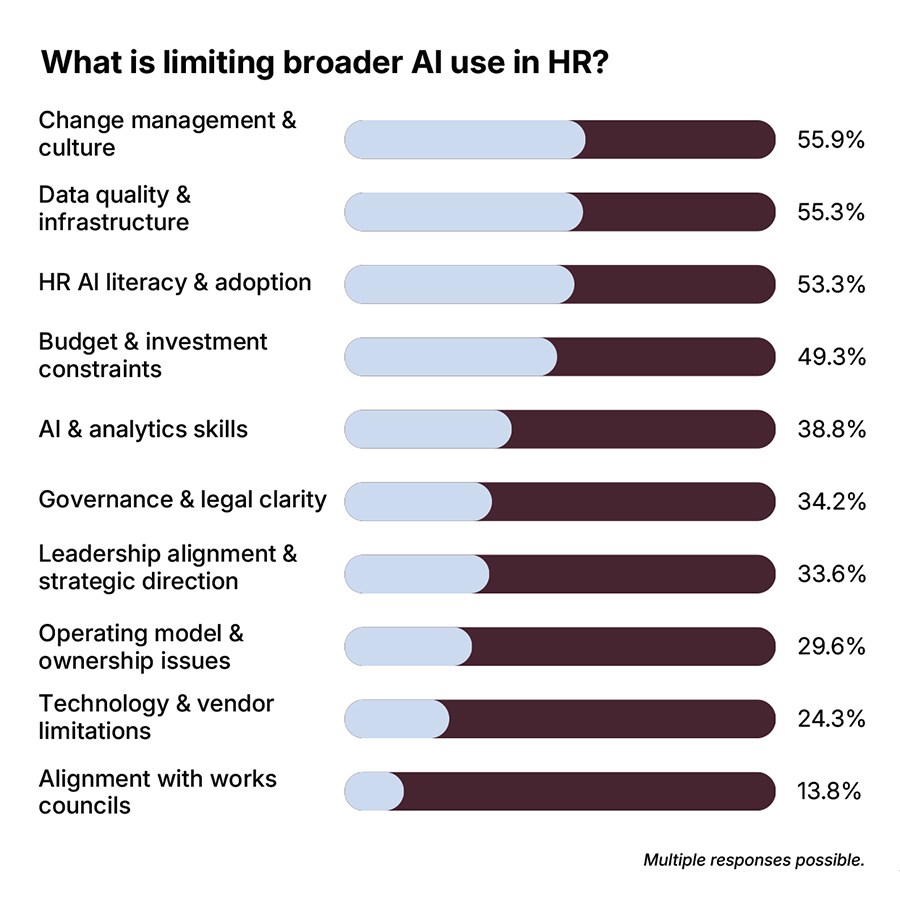
Respondents named change management and culture as the most significant barriers to scaling AI, followed closely by data quality and infrastructure. Concerns about privacy and confidentiality were the most common, raised by 74%, followed by inaccurate output at 68% and over-reliance on AI at the expense of human judgment at 52%.
Lessons from nine organizations
In addition to the surveys, the report draws on interviews with nine organizations: ABN AMRO, Bayer, BD, Campari Group, Mondelēz International, NTT DATA, Standard Chartered, Virgin Media O2, and Wärtsilä.
The interviews show that AI rarely stays within its original use. Once it enters real work, questions about data, accountability, and decision-making quickly follow. The strongest cases began with a real business or people problem, involved employees and managers early, and built foundations that made the next project easier.
“What I find interesting is that many of these use cases are not really about automation. They are about helping managers become more effective,” said Norbert Modla, global talent leader at BD, a medical technology multinational.
Among those who build AI tools, 83% use human review as a safeguard, and many point to stronger data, governance, and measurement as conditions for growth. One major takeaway from the findings is that the human role remains essential and should not be defined simply by whatever technology cannot yet do.
Seven organizational choices behind AI
Drawing on the survey findings and interviews, KennedyFitch developed seven vision statements that shift the focus from adopting AI tools to the organizational choices needed to turn AI into lasting value.
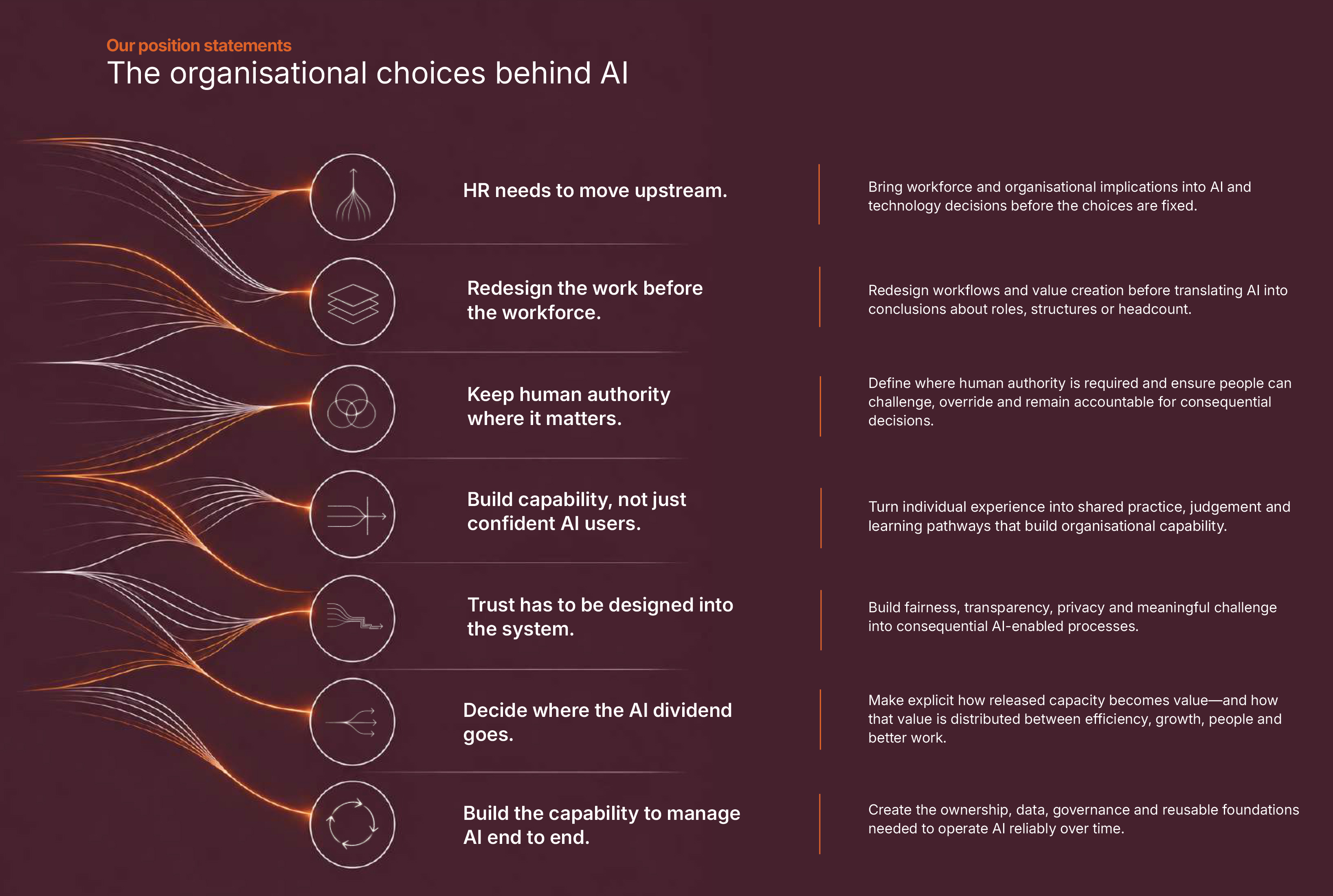
The first two challenge HR’s position in organizational transformation. “HR needs to move upstream” calls for HR to become involved in business and technology decisions before their implications for people and organizations are already determined. “Redesign the work before the workforce” urges organizations to rethink workflows and how value is created before making decisions about roles, structures or headcount.
Three statements address the relationship between people and technology: “Keep human authority where it matters,” “Build capability, not just confident AI users,” and “Trust has to be designed into the system”. They emphasize keeping people accountable for consequential decisions, turning individual AI experience into shared organizational capability, and embedding fairness, transparency and safeguards into AI-enabled processes from the outset.
The final two focus on long-term value and sustainability. “Decide where the AI dividend goes” challenges organizations to make explicit choices about how the benefits of AI are distributed between efficiency, growth, people and better work. “Build the capability to manage AI end to end” calls for clear ownership, governance, reliable data and the ability to manage AI throughout its lifecycle, rather than treating each initiative as a standalone experiment.
Together, the seven statements bring together what Modla describes as the central conclusion of the research. “The future of AI in HR will depend not only on what the technology makes possible, but on the decisions organizations make about work, people and how value is created.”
“The real opportunity is not simply to use AI more effectively, but to make deliberate choices about the organizations we want to build. The technology will continue to change. The bigger question is what we choose to build around it.”